

Refrigerated vs. Desiccant Air Dryers: How to Choose
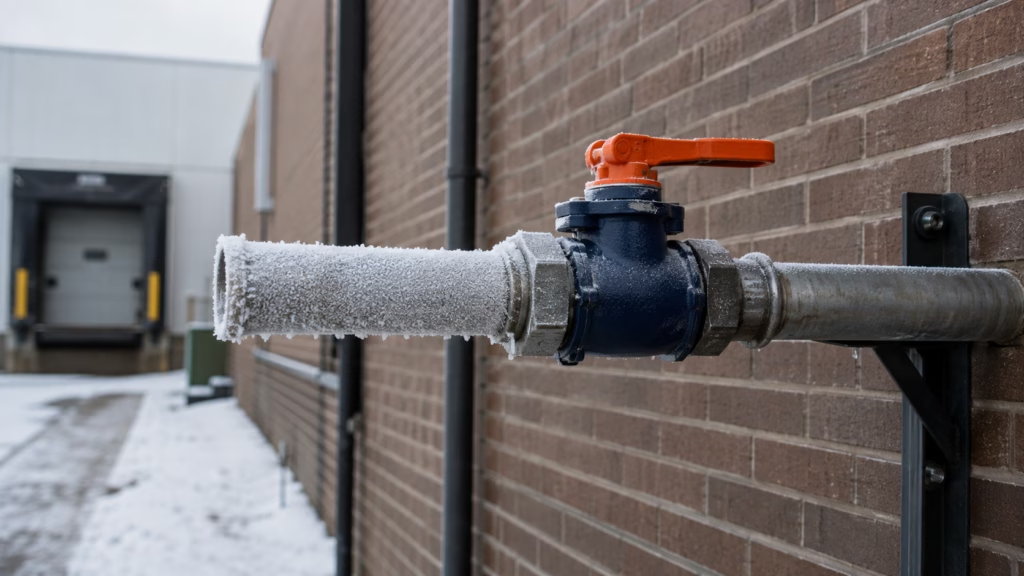
The choice between a refrigerated and a desiccant air dryer comes down to one number: the dew point your operation needs. A refrigerated dryer dries compressed air to a dew point of about 35 to 40°F, which is dry enough for most indoor plant air. A desiccant dryer dries air to -40°F or lower, which matters when your air lines meet freezing temperatures or your process cannot tolerate any moisture. Work out the dew point you actually need, and the right dryer type follows from it. We have been selling, installing, and servicing both types of compressed air dryers since 2010, as part of the 7,000-plus compressed air systems Hodge Industrial has engineered and installed in that time. We ask about dew point before we quote a dryer, because most plants need less dryness than they think. A desiccant dryer costs more to buy and several times more to run, so buying more dryness than your operation needs means paying every month for air quality you will never use. How a Refrigerated Air Dryer Works A refrigerated dryer cools compressed air to around 35 to 40°F. When air gets that cold, the water vapor in it condenses into liquid droplets, the same way a cold drink can sweats on a humid day. A separator collects the water, and an automatic drain sends it out of the system. The air warms back up on its way into your plant, but the moisture is already gone, so the air leaves with a pressure dew point of roughly 35 to 40°F. Refrigerated dryers are the most common type in industrial plants because they handle general plant air well on a steady, modest electrical draw. How a Desiccant Air Dryer Works A desiccant dryer takes water out of the air with beads that hold moisture on their surface, rather than by chilling the air. Most industrial units have two towers filled with those beads. Compressed air flows through one tower and comes out dry, while the other tower regenerates, meaning the water the beads collected is driven back off so that tower is ready for its next turn. This design delivers a -40°F pressure dew point as standard, with versions available down to -100°F. The most common version, called heatless, regenerates by taking about 15 to 20 percent of the dried compressed air and blowing it through the offline tower. That purge air is air you paid to compress, and it never reaches your tools or your process. Heated and blower-purge versions use electric heaters or a blower instead, which cuts purge to roughly 5 to 10 percent of flow. In exchange, they add heater or blower electricity and more parts to maintain. Refrigerated and desiccant are the two types nearly every plant chooses between. Other designs exist for special cases, and our guide to the different types of compressed air dryers covers them. Pressure Dew Point: The Number That Makes the Decision Pressure dew point is the temperature your compressed air can cool to before the water vapor in it starts turning back into liquid. If any spot in your system gets colder than the air’s dew point, liquid water forms at that spot. That could be a pipe run near a dock door, a line between buildings, or a tool at the end of a long outdoor run. This is why dew point makes the decision for you. Industry guidance is to specify a dew point at least 20°F lower than the coldest temperature your compressed air will ever encounter. Find the coldest spot your air reaches, subtract 20 degrees, and you have the dew point you need. If that number sits at or above the 35 to 40°F a refrigerated dryer delivers, refrigerated covers you. If it falls below that, or your process itself cannot tolerate moisture, you need desiccant. Whichever type you choose, the dryer still has to be sized for your flow, pressure, and inlet conditions. Our article on desiccant air dryer sizing explains what goes into that. Refrigerated vs. Desiccant: Side by Side Here is how the two types compare on the points that decide the purchase. Refrigerated vs. Desiccant Air DryersHow the two dryer types compare on dew point, cost, maintenance, and the applications each one suits Factor Refrigerated dryer Desiccant dryer Pressure dew point About 35 to 40°F -40°F standard, options to -100°F Upfront cost Lower Notably higher Operating cost Low and steady electrical draw Several times higher; heatless units purge 15 to 20 percent of rated flow Maintenance Filter and drain upkeep; sealed refrigeration circuit is mostly hands-off between services Filters, valves, and desiccant bead replacement roughly every 3 to 5 years Best fit General plant air, pneumatic tools, indoor manufacturing Freezing exposure, moisture-critical processes, instrument air When a Refrigerated Dryer Is the Right Call A refrigerated dryer is the right call for most indoor operations. Its 35 to 40°F dew point is dry enough to prevent the damage moisture causes in a typical plant: rust and corrosion inside piping, pneumatic tools wearing out early because water washes away their lubrication, and water ruining paint and finish quality. Choose refrigerated for: General plant air in heated, indoor facilities Pneumatic tools and machine air Climate-controlled production and assembly work Most manufacturing where the air lines never leave the building When You Need a Desiccant Dryer You need a desiccant dryer in two situations: when your air will meet freezing temperatures, and when your process cannot tolerate moisture at all. The freezing case is the one our service teams see most. Any air line that runs between buildings, through unheated storage, or out to a loading dock sits in whatever the weather is doing, and in most of the country that means weeks or months below freezing. The air inside that line left a refrigerated dryer with a dew point of 35 to 40°F, which means it still holds enough moisture to condense if it ever cools below that temperature. In a pipe sitting in 20°F